Tallahassee is called the Canopy City for a reason. The live oaks along Meridian Road arch over the pavement like a cathedral. The canopy roads — Miccosukee, Old St. Augustine, Centerville — are on the National Register of Historic Places. The urban tree canopy covers more than half the city's land area, making Tallahassee one of the most heavily treed state capitals in the country.
That canopy is both the city's greatest civic asset and its most persistent maintenance challenge.
Miller's Tree Service has been headquartered in Tallahassee since 1999, and tree service and tree removal are the work we do here every week. We have worked on the live oaks in Betton Hills that were already middle-aged when the houses around them were built. We have responded to pine failures in Killearn after tropical systems. Tree removal and tree pruning cover every neighborhood in the city. This is our home, and these are the trees we know best.
Tallahassee's Tree Canopy: What Makes It Unique
The trees of Tallahassee are not just decorative. They function.
The live oak canopy provides meaningful shade that measurably reduces cooling loads in residential neighborhoods — relevant in a city where summer heat and humidity are reliable for five months of the year. The deep root systems of mature oaks and pines stabilize slopes, absorb stormwater, and reduce urban heat island effects in the urban core. The canopy supports one of the most biodiverse urban wildlife communities in the Southeast, including cavity-nesting birds, bats, fox squirrels, and dozens of other species.
Maintaining this canopy requires consistent, knowledgeable care. Tallahassee's dominant tree species — live oaks, water oaks, loblolly pines, longleaf pines, sweetgums, magnolias, and pecans — each have distinct biology, distinct failure patterns, and distinct requirements for proper pruning. Treating them all the same is a reliable way to make expensive problems.
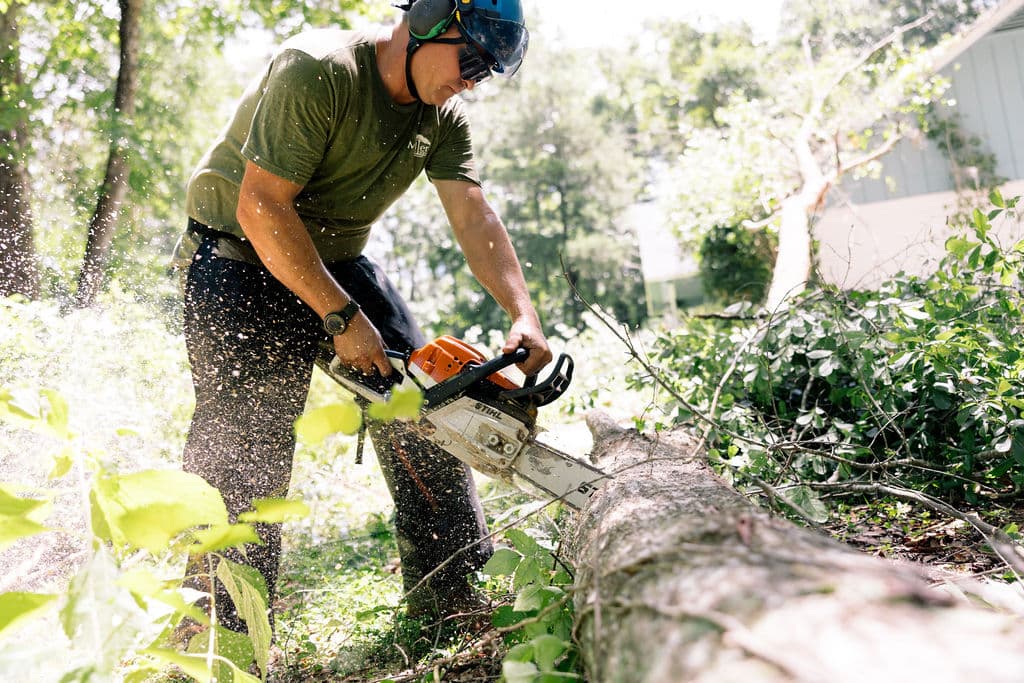
Common Tree Issues We See in Tallahassee
Post-construction root damage. Tallahassee is growing rapidly, and construction activity that disturbs root zones within the drip line of existing trees is among the most common causes of tree decline we see. Trees can look perfectly healthy for two to five years after root damage and then decline suddenly as their compromised root system fails to support the canopy through a drought summer or a windy fall.
Oak wilt pressure. While Tallahassee's live oaks are somewhat less susceptible than red oaks to Ceratocystis fagacearum, summer pruning creates entry points for the Nitidulid beetles that can vector the disease. Our arborists time pruning to dry, cool months to minimize this risk.
Pine bark beetles. Southern pine beetles and Ips engravers are endemic to North Florida and attack trees that are under stress from drought, root damage, or overcrowding. A tree with an active infestation can look stressed but recoverable. It can also be past the point of no return. A trained arborist assessment is the only reliable way to know.
Storm damage and structural failure. Tallahassee averages more thunderstorm days per year than almost any other major city in the country, and the Gulf of Mexico delivers tropical systems that bring sustained winds capable of toppling trees with structural defects. A pre-storm structural assessment — removing dead wood, addressing co-dominant stems, thinning dense crowns — is the most effective thing a homeowner can do to reduce storm risk.
Neighborhoods We Serve in Tallahassee
Our crews work throughout the city, including:
- Myers Park, Betton Hills, and Midtown: Established neighborhoods with mature live oak canopies requiring skilled structural pruning
- Killearn Estates, Killearn Acres, and Velda Dairy: Northeast Tallahassee neighborhoods with significant pine populations and recurring storm damage needs
- Waverly Hills and Indian Head Acres: Historic neighborhoods with large specimen oaks that require careful, preservation-focused management
- SouthWood, Buck Lake, and Lake Munson Hills: Southeast Tallahassee growth corridors with a mix of retained native trees and newly planted landscapes
- Frenchtown and Smokey Hollow: Historic west-side neighborhoods with mature shade trees in an urban setting
- The Market District and Railroad Square: Commercial and mixed-use areas requiring coordinated commercial tree care
Tree Permits in Tallahassee
Tallahassee's tree protection rules depend on your property type, zoning, and the species involved. Under the Land Development Code (Section 5-83), single-family residential properties are generally exempt from tree removal permits for non-protected species under 36 inches DBH. However, certain species — including live oaks, dogwoods, longleaf pines, and trees along designated canopy roads — receive additional protection regardless of size. Commercial properties, multi-family developments, and properties in environmentally sensitive zones face stricter requirements, with protections beginning at smaller diameters.
Florida Statute 163.045 also gives homeowners the right to remove any tree — regardless of local ordinance — if an ISA Certified Arborist documents it as a danger to people or property.
The city's Urban Forestry staff can be reached at (850) 891-8601. Because permit requirements vary significantly by property type, zoning, and tree species, the best first step is to call Miller's for a free assessment. Our arborists are familiar with both city and county regulations and can tell you exactly what applies to your situation before any work begins.
Tree Service and Tree Removal in Tallahassee
- Tree Removal
- Tree Pruning & Trimming
- 24/7 emergency tree service
- Stump Grinding
- Tree Hazard Inspections
- Tree Health & Disease Assessment
- Storm Prep Tree Services
- Tree Preservation
- Deep Root Fertilization
- Structural Support (Cabling & Bracing)
Why Miller's for Tallahassee Tree Service
We are based here. Our arborists live in Tallahassee, our trucks are staged in Tallahassee, and our 25 years of experience is concentrated in these specific neighborhoods, these specific tree species, and these specific conditions. We hold TCIA Accreditation, employ nine ISA Certified Arborists including a Board Certified Master Arborist, and have been voted Tallahassee's Best Tree Service 18 years running.
Call (850) 894-TREE for a free estimate.