A quick note on terminology before we get into specific species: the ISA Certified Arborist Study Guide identifies trees using a combination of morphology features — leaf shape, leaf margin (the edge — entire, serrate, lobed, etc.), leaf arrangement on the stem (alternate, opposite, or whorled), bark texture, growth habit, and reproductive structures (flowers, fruit, acorns). All oaks fall in the genus Quercus and share one defining reproductive trait — they produce acorns. The species below differ in leaf shape, evergreen-vs-deciduous habit, wood density, and lifespan.
Oaks are the defining trees of the Tallahassee landscape. Drive down any canopy road in town and you are surrounded by them -- their massive limbs arching overhead, their trunks draped in Spanish moss, their roots heaving the sidewalks they have outgrown. But while most residents can recognize "an oak," fewer can distinguish between the different species, and the differences matter. Oak species vary significantly in their lifespan, structural strength, growth rate, and susceptibility to disease, all of which affect how you should care for them and what to expect from them on your property.
Live oak — the long-lived monarch
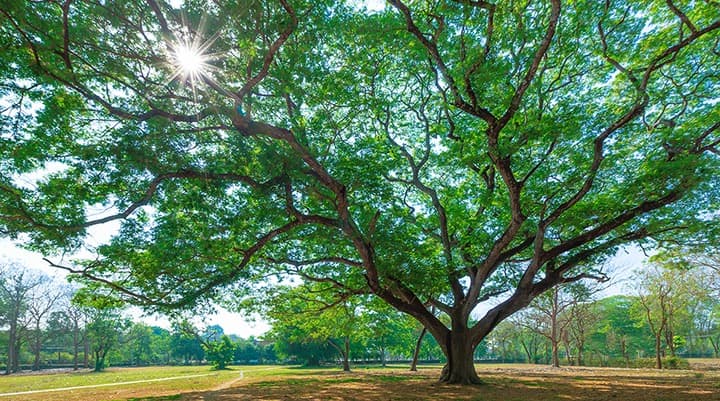
The live oak is the undisputed monarch of Tallahassee's tree canopy. Recognizable by its broad, spreading crown, relatively short trunk, and small, leathery, evergreen leaves with smooth edges, the live oak is technically semi-evergreen -- it drops its old leaves in spring just as new ones emerge, so it is never truly bare. Live oaks are extraordinarily strong and long-lived, routinely surviving for centuries, and their dense wood makes them among the most wind-resistant trees in our area. UF/IFAS's species profile catalogs Quercus virginiana as one of the most storm-tolerant trees grown in Florida — a finding that lines up with what we see on the ground after every hurricane. They are the trees most people picture when they think of the classic Southern landscape.
Water oak and laurel oak — fast, common, and short-lived
Water oaks are the second most common oak in residential Tallahassee, and they could not be more different from live oaks in terms of longevity and reliability. Water oaks grow fast, reaching maturity in just a few decades, but they are also relatively short-lived, often beginning to decline and develop internal decay after fifty to seventy years. Their leaves are variable in shape -- some are spatula-shaped, others lobed -- and they are deciduous, dropping their leaves in late fall and winter. Laurel oaks are similar to water oaks in their growth pattern and lifespan and are often confused with them. Laurel oak leaves are more consistently narrow and elongated with smooth margins. Both species are common causes of storm damage in Tallahassee because their fast growth produces weaker wood that is more prone to failure.
Less common Tallahassee oaks: Shumard, overcup, and turkey
Other oak species you may encounter around Tallahassee include the Shumard oak, a large deciduous species with deeply lobed leaves and excellent fall color; the overcup oak, found in wetter areas with distinctive acorn cups that nearly enclose the nut; and the turkey oak, a smaller species common on sandy, well-drained soils with deeply lobed leaves resembling a turkey foot. The Florida Forest Service's tree ID resources include leaf and bark detail for each of these if you want to confirm what's in your yard. Knowing which oak species you have on your property helps you anticipate their needs and potential problems. If you have mature water oaks or laurel oaks that are approaching the end of their natural lifespan, a professional assessment from Miller's Tree Service can help you determine whether they are still structurally sound or whether proactive removal and replacement with longer-lived species is the wisest course of action.