Real Simple, one of the country's largest home and lifestyle publications, recently turned to our own Katie Watkins for expert guidance on a question every homeowner with mature trees eventually faces: how do you know when a tree has become a hazard? You can read the full article, 7 Signs Your Tree Might Need to Come Down Before It Damages Your Home, on RealSimple.com.
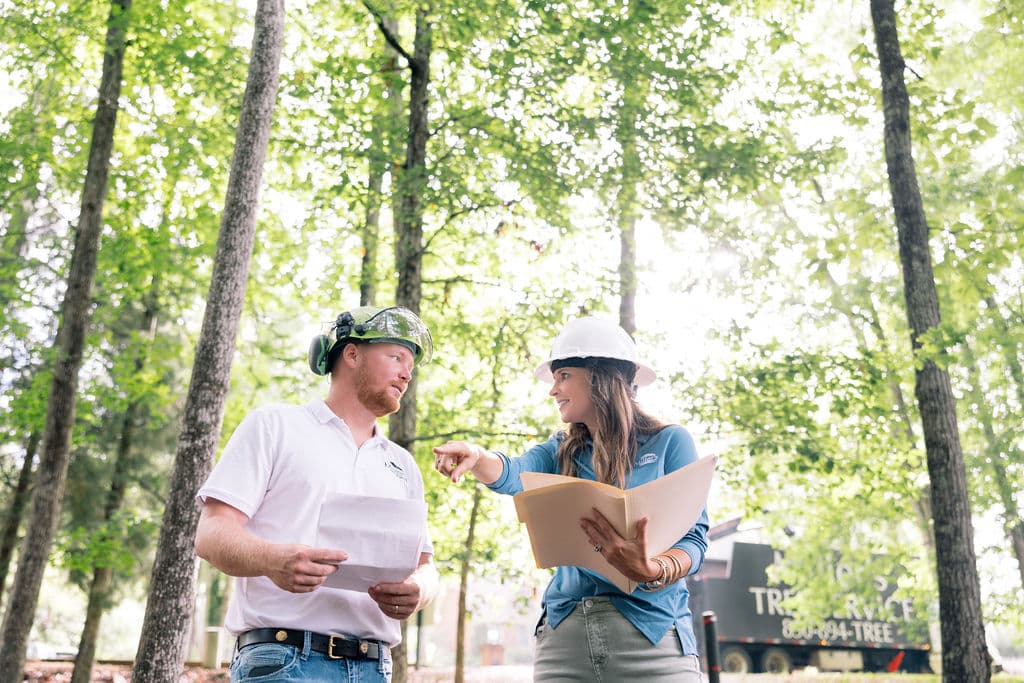
Katie is an ISA Certified Arborist on our sales team and holds the ISA's Tree Risk Assessment Qualification (TRAQ) — the same credential and methodology she walked Real Simple's readers through in the piece.
The seven defect categories
The article is built around the International Society of Arboriculture's seven major defect categories, the framework Katie and our other TRAQ-qualified arborists use on assessments here in Tallahassee every week:
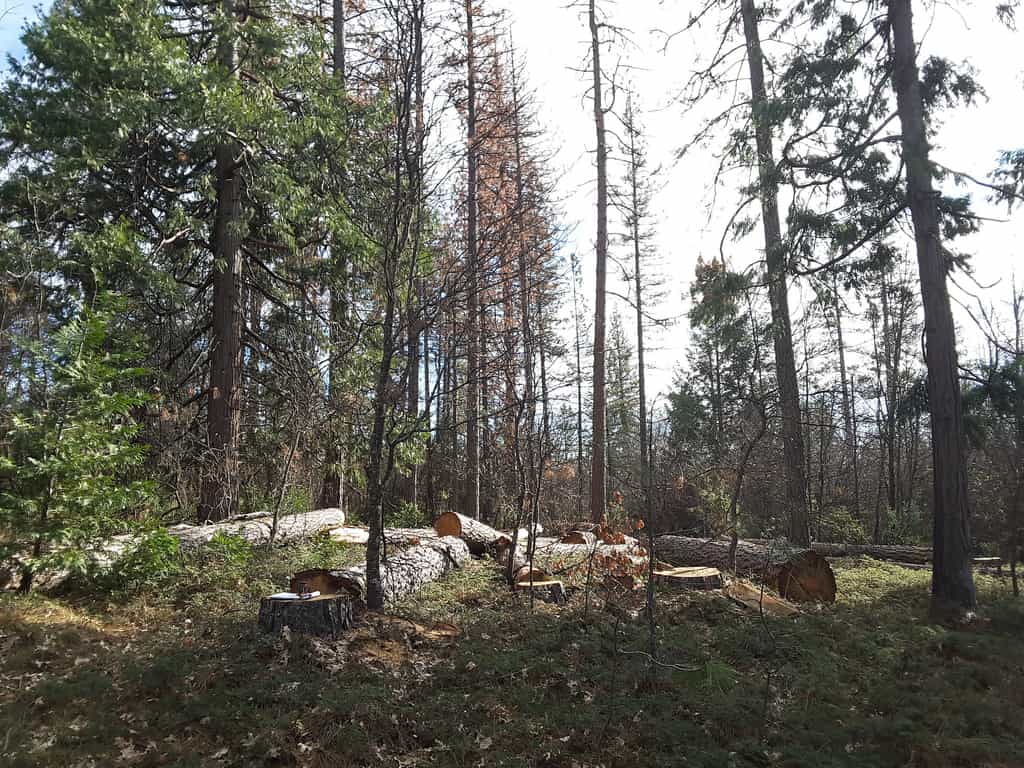
- Dead, dying, or hanging parts — dead branches in the canopy, "hangers" lodged in the crown, or an entirely dead tree.
- Cracks — where location and direction matter enormously. A crack running across the grain is far more urgent than one running along the trunk.
- Weak branch unions — codominant stems with included bark, which Katie called out as the classic failure mode on Tallahassee water oaks: decades of beautiful, symmetric growth, then one side splits off in a tropical storm.
- Unusual architecture — a severe lean, an unbalanced canopy, or long lateral branches with nothing supporting them.
- Loss of root support — soil heaving on one side, depressions on the lean side, damaged buttress roots, or recent construction inside the drip line.
- Decay — cavities, conks and mushrooms on the trunk or root flare, soft wood under the bark, or carpenter ants (which only nest in wood that's already decayed).
- Mechanical damage and cankers — old pruning wounds that never closed, lightning scars, weed-trimmer damage at the base, or canker infections that open the door to decay and disease.
A single moderate defect may leave a tree at low risk; several together can mean it needs attention now. And a defect alone isn't the whole story. As Katie explained in the article, the ISA defines tree risk as likelihood times consequences — “Two trees with identical visible defects can have totally different risk ratings based on what's underneath them.”
The part homeowners overlook: most trees can be saved
Our favorite takeaway from the piece is one we repeat to Tallahassee homeowners constantly. As Katie told Real Simple, “Most trees that look bad can be saved. We actually want to save your tree if possible.”
A live oak with a few dead branches and a thinning crown, a pecan dropping limbs because it hasn't been pruned in a decade, even a water oak with surface decay on one major limb — these are frequently trees that structural pruning, cabling and bracing, or root-zone work can keep standing for decades. Removal is the right call when the defect can't be mitigated, but it should be the conclusion of an assessment, not the starting assumption.
Have a tree that matches one of these signs?
If a tree near your home shows any of the seven defect categories above — or you just want a documented evaluation after a storm or before a property sale — that's exactly what a professional tree risk assessment is for. Request a free estimate and one of our ISA Certified Arborists will take a look, or call us at (850) 894-TREE.