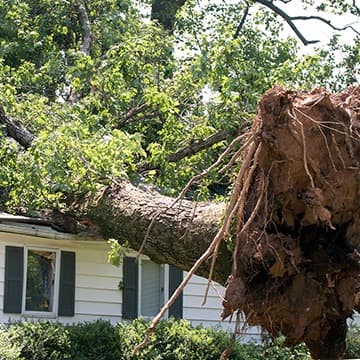
The storm has passed, but a broken tree can still be dangerous. A hanging limb or a shifted root plate deserves attention before cleanup begins. Start by deciding where it is safe to stand and which damage needs professional assessment.
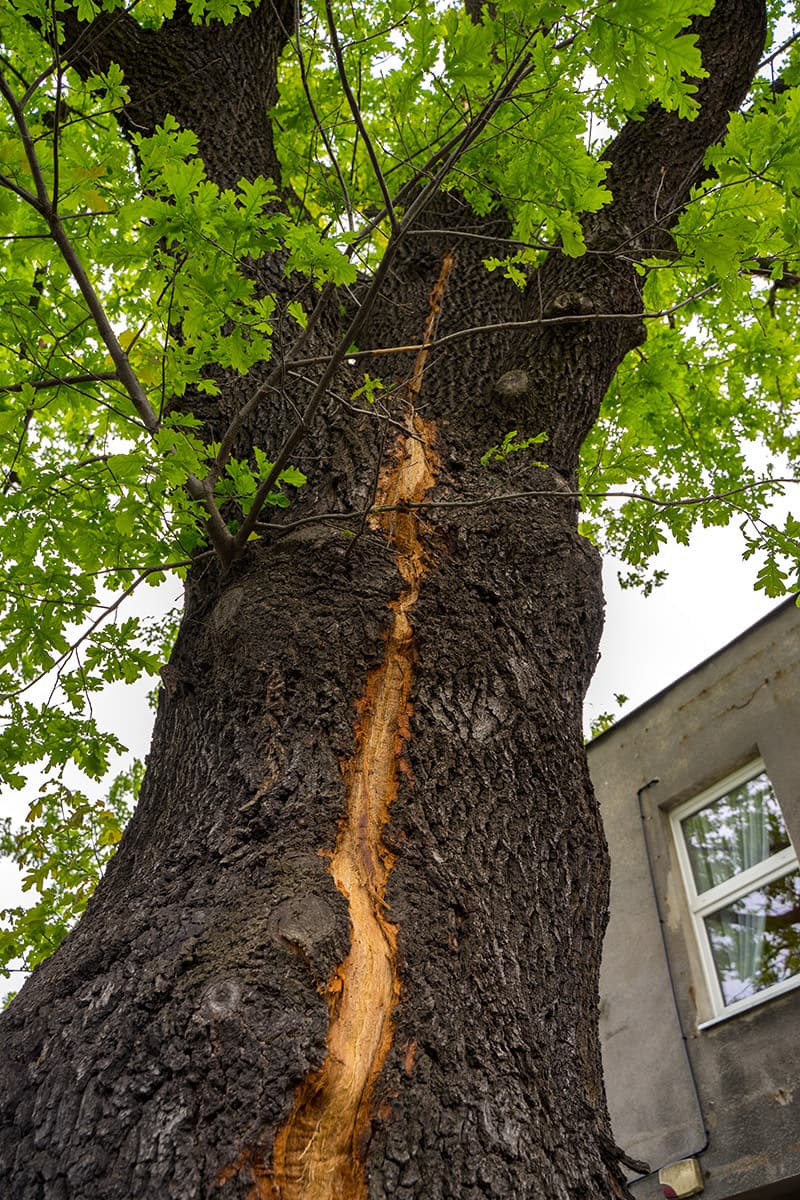
The first priority after any storm is safety. Stay away from downed trees that are near power lines -- always assume a downed line is energized and call your utility provider immediately. Once it is safe to walk your property, look for hanging branches lodged in the canopy, split trunks, leaning trees with exposed root plates, and large limbs resting on structures. These situations require professional attention and should not be attempted as DIY projects. A certified arborist can evaluate the structural integrity of damaged trees and recommend the safest course of action.
Many storm-damaged trees can be saved with proper corrective pruning. Trees that have lost a portion of their canopy but retain a sound trunk and healthy root system often recover well over the following growing seasons. Clean pruning cuts back to the branch collar promote faster wound closure and reduce the risk of decay entering the trunk. Avoid the temptation to over-prune in an effort to "balance" the canopy -- the tree needs as much remaining leaf area as possible to fuel recovery. On the other hand, trees with split trunks, severed root plates, or more than fifty percent canopy loss may be beyond practical recovery and are best removed to prevent further risk.
After emergency cleanup is complete, take time to assess your entire property for less obvious damage. Cracks in major branch unions, subtle lean changes, and root zone disturbance can all indicate compromised structural integrity that may not be immediately apparent. Scheduling a follow-up tree risk assessment a few weeks after the storm allows an arborist to identify these concerns before the next weather event. Tallahassee's summer storm season runs from June through September, so there is often more severe weather on the way. Investing in professional evaluation and recovery now helps ensure your landscape is as resilient as possible for whatever comes next.