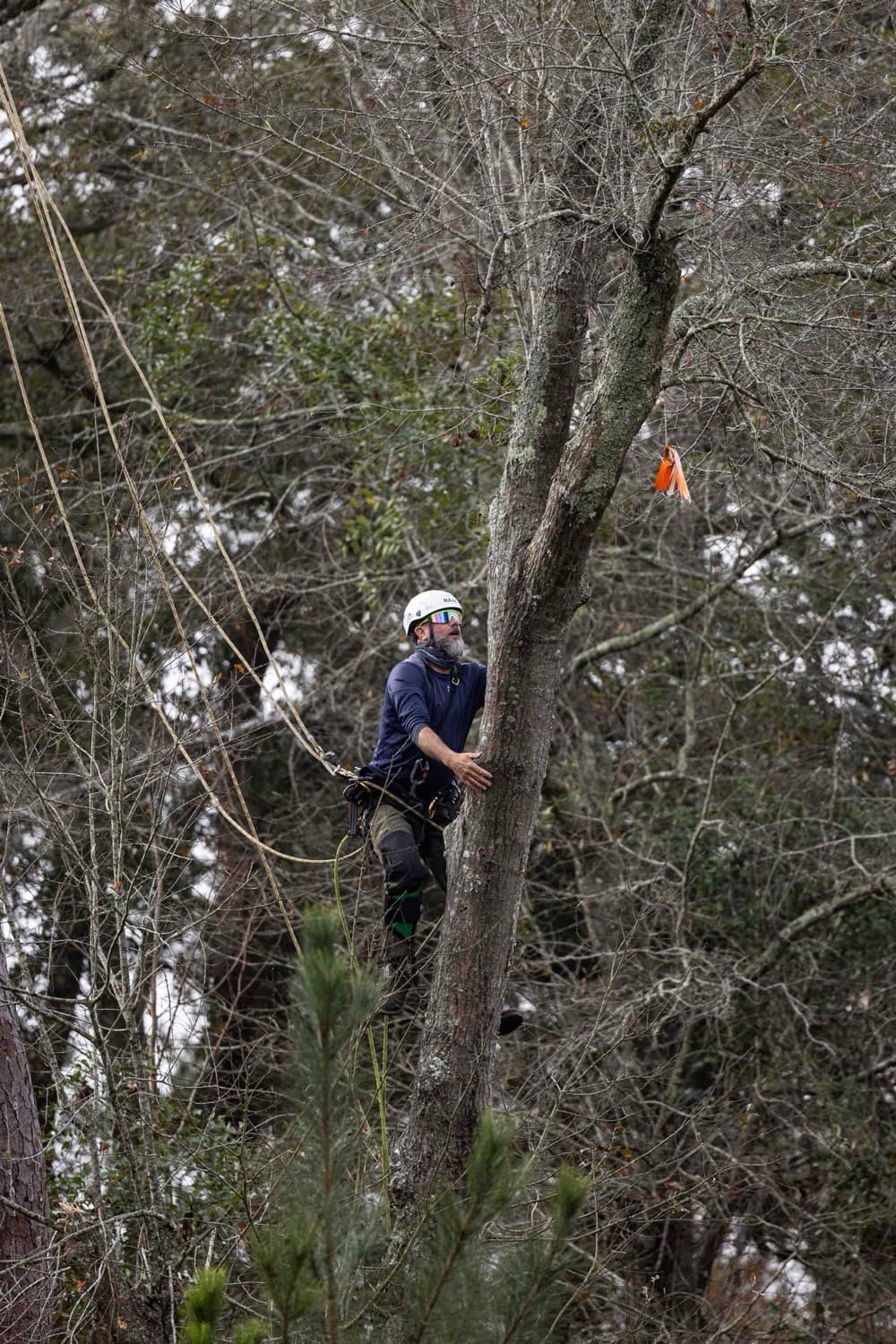
Every winter in Tallahassee, a wave of well-intentioned but misguided pruning sweeps through neighborhoods as homeowners and landscape crews hack crape myrtles back to stubby, flat-topped trunks. This practice, widely known as "crape murder," is one of the most common tree care mistakes in the Southeast. While it rarely kills the tree outright, it destroys the natural vase-shaped form that makes crape myrtles so attractive, encourages weak, whip-like regrowth that is prone to breaking, and does not actually produce better blooms. Learning to prune crape myrtles correctly is one of the simplest ways to improve the appearance of your Tallahassee landscape.
The right way to prune a crape myrtle
The right approach to crape myrtle pruning is selective and restrained. Start by removing any suckers growing from the base of the trunk and any small twiggy growth along the lower portions of the main stems -- this is called limbing up and it reveals the beautiful, smooth, mottled bark that is one of the crape myrtle's best features. Next, remove any dead, crossing, or rubbing branches from within the canopy. If the interior has become congested with too many stems, thin out some of the weaker ones to open up the center of the tree and improve air circulation, which reduces the risk of powdery mildew. Finally, you can remove spent seed heads from the previous season's blooms by cutting back to just above an outward-facing bud or side branch. That is it. The vast majority of crape myrtles need nothing more than this each year.
When to prune in Tallahassee — and how to fix past damage
The best time to prune crape myrtles in Tallahassee is late winter, from January through early March, while the tree is still dormant. The reason is timing of bloom development: the ISA Certified Arborist Study Guide notes that crapemyrtle blooms form on current-season growth, which is why late-winter pruning enhances flowering rather than removing the buds. Pruning during dormancy also lets you see the branch structure clearly and minimizes stress on the tree. Avoid pruning in late spring or summer, as this removes developing flower buds and delays or reduces the summer bloom display that is the whole reason most people plant crape myrtles in the first place. If your crape myrtle has been topped in previous years, you can begin rehabilitating it by selecting the strongest two or three shoots that emerged from each topping cut and removing the rest. Over two to three years of corrective pruning, the tree can regain a more natural form.
When the answer is the wrong cultivar, not bad pruning
If your crape myrtle has simply outgrown its space and heavy pruning seems like the only option, the real issue may be that the wrong cultivar was planted in the wrong spot. Crape myrtle cultivars range from three-foot dwarfs to thirty-foot trees, so there is a size for almost every situation. Rather than fighting a full-sized crape myrtle with annual butchering, consider replacing it with an appropriately sized cultivar that fits the space naturally. Miller's Tree Service can help you evaluate your crape myrtles, perform proper corrective pruning on trees that have been topped, and advise on cultivar selection if replacement makes more sense than continued pruning battles.