A branch over the roof may need pruning. A full, healthy canopy may need very little. The decision starts with what you want to change and how the tree will respond.
Several signs indicate that pruning is overdue. Dead branches in the canopy are the most obvious -- they serve no purpose for the tree and can fall without warning during storms or even on calm days. Branches that cross and rub against each other create wounds that invite pests and disease. Dense canopies that block light and airflow to the interior promote fungal growth and make the tree more vulnerable to wind damage. If branches are encroaching on your roof, rubbing against siding, or blocking sightlines along driveways and sidewalks, those are practical reasons to prune as well.
Timing depends on what you are trying to accomplish and which species you are working with. For most deciduous trees in North Florida, late winter during dormancy is the preferred window because the branch architecture is visible and the tree is under minimal stress. Live oaks are best pruned during the driest months to reduce the risk of oak wilt transmission by nitidulid beetles. Spring-flowering ornamentals like dogwoods and azaleas should be pruned right after blooming to avoid removing next season's flower buds. Emergency pruning for storm damage or hazardous branches, of course, should happen as soon as it is safe to do so regardless of the calendar.
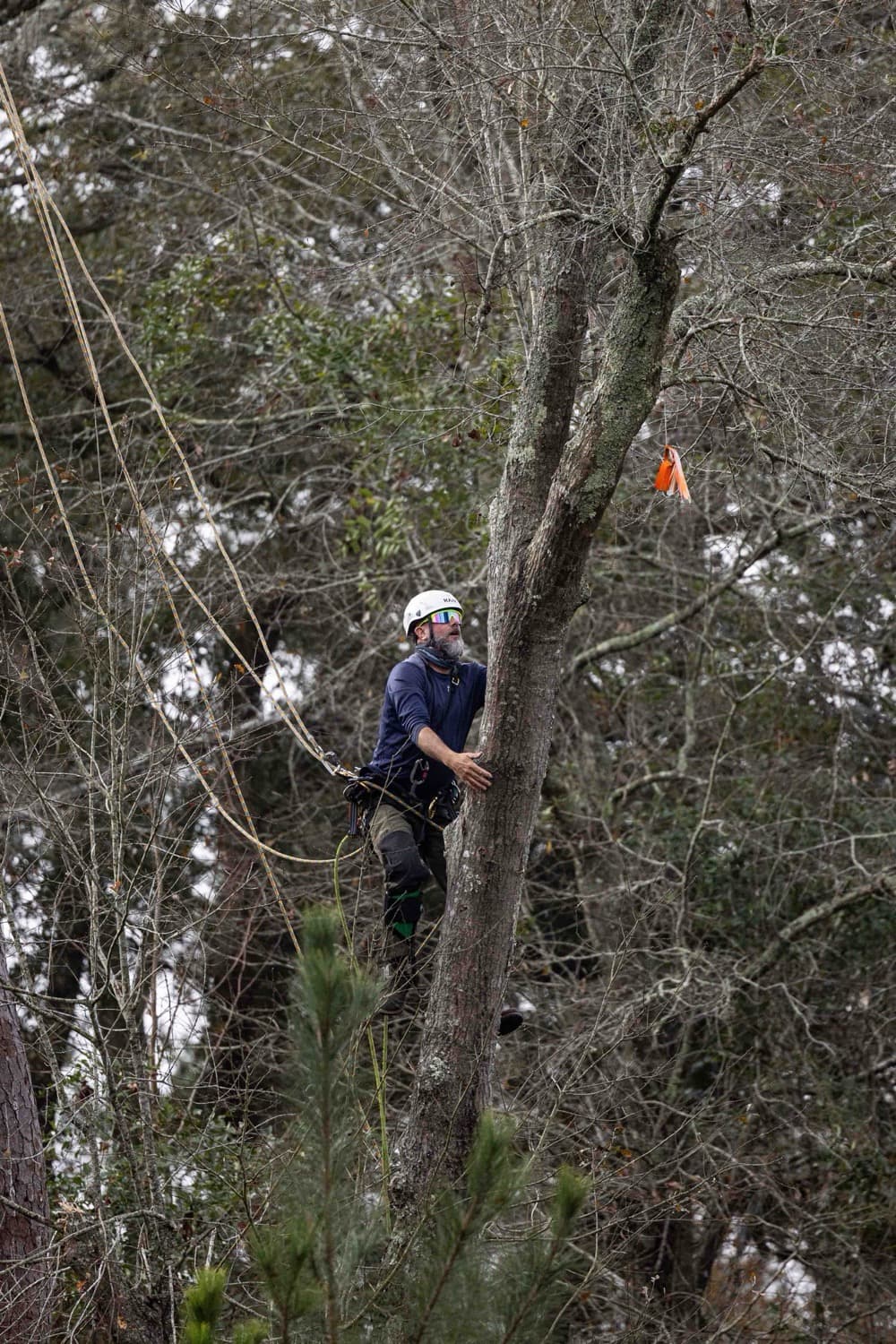
While minor work like removing small dead twigs can be handled by a handy homeowner, most pruning on established trees should be left to trained professionals. Improper cuts -- especially topping, lion-tailing, or flush cuts -- cause long-term structural problems and can actually make a tree more dangerous over time. A certified arborist understands where to cut, how much to remove, and how each species responds to pruning. If you are wondering whether your trees need attention, a professional evaluation is the best starting point. Regular pruning on a three-to-five-year cycle keeps most Tallahassee trees in excellent condition and significantly reduces the risk of storm-related failures.